01 Intermittent Fasting
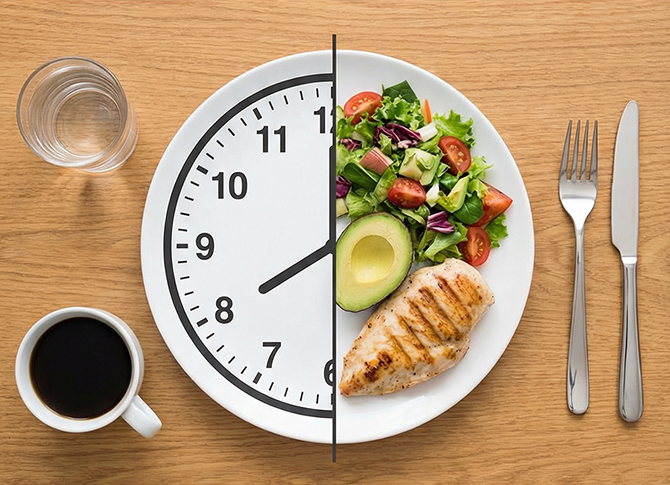
Intermittent fasting is not about what you eat — it's about when you eat. By cycling between periods of fasting and eating, your body is forced to burn through its glycogen stores and switch to using stored body fat as its primary fuel source. This metabolic shift is where the real results come from.
The most popular approach is the 16:8 method — fast for 16 hours, eat within an 8-hour window. For most people, this means skipping breakfast, eating from midday to 8pm, and letting the body fast overnight. It fits easily into a normal daily routine without requiring dramatic lifestyle changes.
When you fast, insulin levels drop significantly. Lower insulin means your body can access and burn stored fat far more efficiently. Over time, this leads to steady fat loss, improved body composition, and better metabolic health — without obsessing over calorie counting or complex meal plans.
Beyond fat loss, many people report sharper mental clarity, more consistent energy levels throughout the day, and a healthier relationship with food. Cravings reduce. Hunger becomes more manageable. You stop eating out of habit and start eating with intention.
Discipline is built through fasting. Every morning you push through without food, you are training your mind as much as your body. That mental resilience carries into every other area of your life.


02 Carnivore Diet
The carnivore diet strips nutrition back to its most basic and primal form — meat, fish, eggs, and animal fats. Nothing else. No carbohydrates, no plant foods, no processed anything. Just the foods humans evolved eating for thousands of years before modern agriculture changed everything.
With zero carbohydrate intake, the body enters a deep state of ketosis almost immediately. Your entire energy system switches over to running on fat and ketones. Many people experience a dramatic reduction in body fat within the first few weeks, along with a noticeable improvement in energy that doesn't spike and crash the way it does on a carb-heavy diet.
One of the most significant benefits reported by people who commit to carnivore is the elimination of inflammation. Many inflammatory conditions — joint pain, skin issues, digestive problems, brain fog — improve or disappear entirely when plant-based foods and processed carbohydrates are removed from the diet. The simplicity of the food list removes any guesswork.
Mentally, carnivore is one of the most straightforward diets to follow. There are no macros to track, no labels to read, no temptation to navigate around. You either eat animal products or you don't. That clarity makes it easier to stay consistent and eliminates the decision fatigue that derails most diets.
This is not a diet for the faint-hearted. It requires commitment and a willingness to go against the grain. But for those who stick with it, the physical and mental results can be transformative.
03 Keto Diet
The ketogenic diet is built on one core principle — keep carbohydrates low enough that your body has no choice but to burn fat for fuel. By keeping carbs under 20 to 50 grams per day, insulin stays low, glycogen stores are depleted, and the liver begins producing ketones. Your body becomes a fat-burning machine operating on a clean, consistent source of energy.
The typical keto breakdown sits at 70 to 75% fat, 20 to 25% protein, and just 5 to 10% carbohydrates. This ratio might feel extreme at first, but once the body adapts — usually within one to two weeks — most people experience stable energy throughout the day, significantly reduced hunger, and a sharpness of focus that is difficult to achieve on a high-carb diet.
Unlike the carnivore diet, keto allows low-carb vegetables, certain dairy products, nuts, and seeds. This flexibility makes it more sustainable for people who want the fat-burning benefits of ketosis without completely eliminating plant-based foods. It is a practical, structured approach that delivers serious results when followed correctly.
Fat loss on keto tends to be rapid in the early stages as the body sheds water weight alongside stored glycogen. Over time, as the body becomes fat-adapted, results become more consistent and long-lasting. Blood sugar levels stabilise, cravings for sugar and processed food reduce dramatically, and energy no longer depends on your last meal.
Keto rewards structure and commitment. Cheat days and loose tracking will knock you out of ketosis. But for those who treat it as a lifestyle rather than a short-term fix, the results speak for themselves.
04 Mediterranean Diet
The Mediterranean diet is consistently ranked the world's best overall diet — and for good reason. Rooted in the traditional eating habits of southern Europe and the Middle East, it is built around whole, unprocessed foods: olive oil, fish, lean meats, legumes, vegetables, fruits, whole grains, and nuts. It is not a restrictive diet. It is a way of eating that your body recognises and responds well to.
Where the other approaches on this page work by eliminating entire food groups, the Mediterranean diet works through quality and balance. The focus is on eating foods in their most natural state, limiting processed oils, refined sugar, and ultra-processed products, and prioritising meals that nourish the body rather than just filling it.
The research behind this approach is extensive. Decades of studies link the Mediterranean diet to reduced risk of heart disease, improved brain health, lower levels of systemic inflammation, and significantly better long-term outcomes for weight management. It is one of the few dietary approaches with strong scientific backing across multiple health markers simultaneously.
Because it is less restrictive than keto or carnivore, the Mediterranean diet is far easier to sustain over the long term. There are no strict macro targets, no foods that are completely off limits, and no dramatic adaptation phase. It works with your life rather than demanding you rebuild it from scratch.
For people who want lasting results without extremes, this is the most sustainable path. The goal is not perfection — it is consistency over months and years, building a relationship with food that supports your health, your training, and your longevity.